
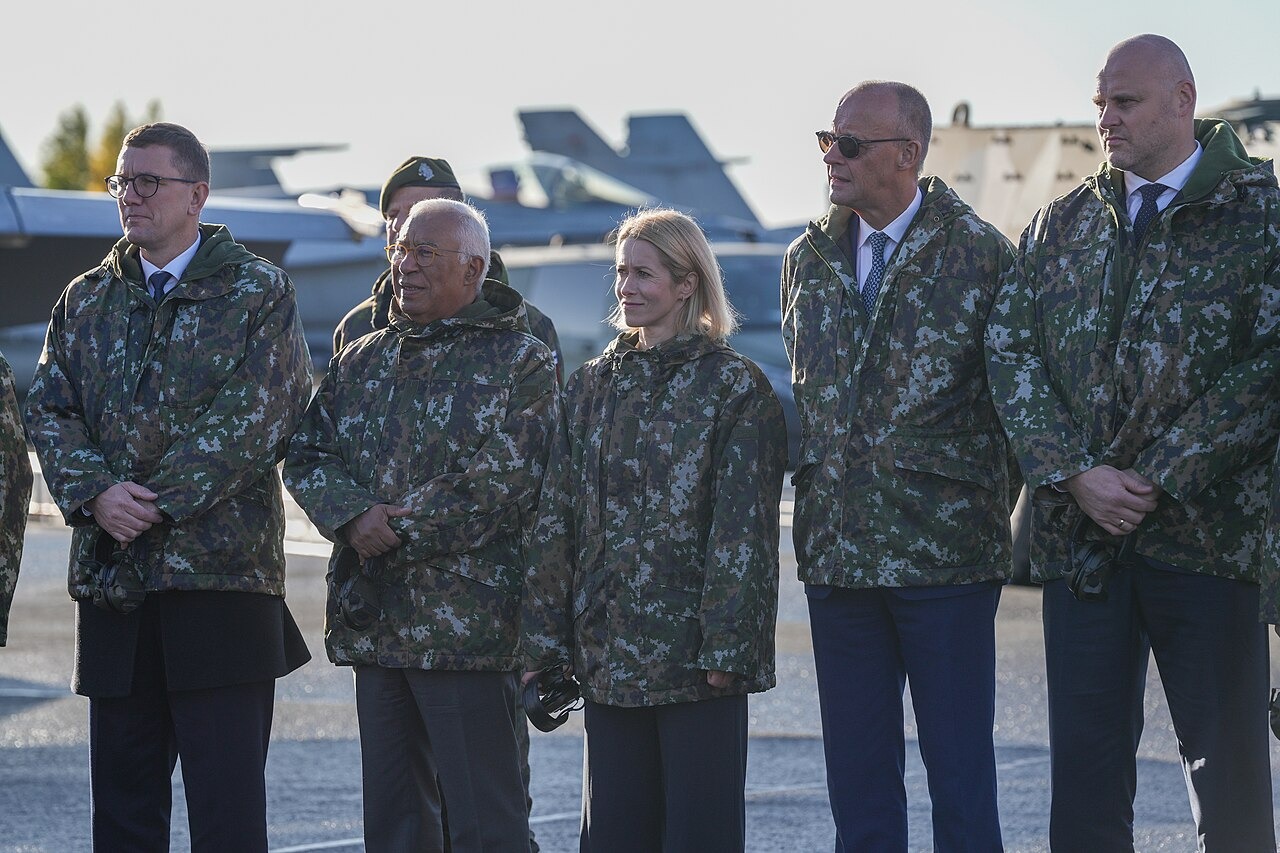
The European Union adopted a new Arctic strategy on October 20 that strengthens the bloc’s security focus in a region facing increased military activity, infrastructure risks and geopolitical competition, according to the European Commission’s strategy summary.
The plan calls for the EU to work with member states and Arctic partners, in complementarity with NATO, to improve preparedness, protect critical infrastructure and strengthen its ability to operate in Arctic conditions. It identifies better monitoring, information-sharing and maritime and land-based response capacity as priorities.
A central measure is a proposed Maritime Security Hub designed to share information from the seabed to space. The first step would support an Arctic Cable Hub to monitor, protect and help repair submarine cables in the North Atlantic-Arctic. The strategy also calls for mapping industrial capabilities and operational needs to expand European icebreaker capacity, as well as a dedicated Arctic surveillance pilot planned for 2027 to improve maritime-domain awareness.
The strategy places the measures in a wider contest involving Russia, the United States and China. DW’s report said EU foreign affairs chief Kaja Kallas cited drone incursions, GPS jamming and undersea-cable sabotage as threats to Arctic security. EU Commissioner Jozef Sikela said the initiative was not intended to compete with NATO, which he described as the center of defense and deterrence in the region.
The EU also proposes resilient submarine-cable connectivity linking Greenland directly to Europe, with possible future extensions to Canada and Japan. The strategy does not establish that any proposed project is already operational, and the sources do not specify a timetable for the maritime hub or cable network beyond the surveillance pilot’s planned 2027 launch.